Introduction
위치 | 경기도 수원시 장안구 장안로 96
기존 용도ㅣ폐주유소
변경 용도ㅣ막걸리 양조장
대지 면적ㅣ522㎡
건축 면적ㅣ246㎡
층수 | 1F
Location | 96, Jangan-ro, Jangan-gu, Suwon-si, Gyeonggi-do, Republic of Korea
Original UseㅣAbandoned Gas station
Proposed UseㅣMakgeolli brewery
Site Areaㅣ522㎡
Building Areaㅣ246㎡
Floors | 1F
Agenda
본 프로젝트는 수원 도심에 위치한 20년간 방치된 폐주유소를 빠른 소비의 공간에서 느린 발효와 생산의 장소로 전환하는 적응적 재사용 프로젝트이다.
이 부지는 본래 18세기 공동 우물의 자리로, 머무름과 교류의 상징이었다. 그러나 20세기에 들어 주유소로 변하며 이동과 소비의 상징이 되었고, 시대의 변화와 함께 주유소의 수요가 급격히 감소하면서 산업적 잔재로 버려졌다.
우리는 이 버려진 구조를 막걸리 양조라는 ‘발효’의 행위를 통해 되살리며, 인간과 토양이 동시에 치유되는 순환적 건축을 제안한다. ‘머무름–소비–생산’이라는 시간의 서사를 따라, 이 프로젝트는 도심 속 폐주유소를 재활성화하는 새로운 건축적 프로토타입으로 확장될 가능성을 보여준다.
This project transforms an abandoned gas station in Suwon, Korea—left unused for over two decades—into a space of slow fermentation and production, redefining a site once dominated by speed and consumption.
Originally, the site served as a communal well in the 18th century, symbolizing gathering and dwelling. In the 20th century, it became a gas station—an emblem of mobility and fast consumption—but as the demand for fuel declined, it was left derelict, a relic of industrial modernity.
Through the act of brewing Makgeolli, the project revives the forgotten structure, turning it into a living cycle of fermentation and healing for both land and people. Following the temporal sequence of staying–consuming–producing, this proposal envisions a new architectural prototype for the adaptive reuse of abandoned gas stations within the urban fabric.
Concept

프로젝트의 디자인 개념은 ‘옹기 속 발효 과정’에서 출발한다. 옹기 안에서 누룩이 미생물 작용을 통해 천천히 발효되고, 그 위를 삼베가 덮으며 숨을 쉬듯 발효의 속도를 조절한다. 이는 시간과 생명이 교차하는 느린 순환의 과정이다.
The concept of the project originates from the fermentation process inside a traditional onggi (earthen jar). Inside the jar, nuruk—the fermentation starter—slowly activates microbial life, while the hemp cloth that covers it breathes and filters air, regulating the pace of fermentation.

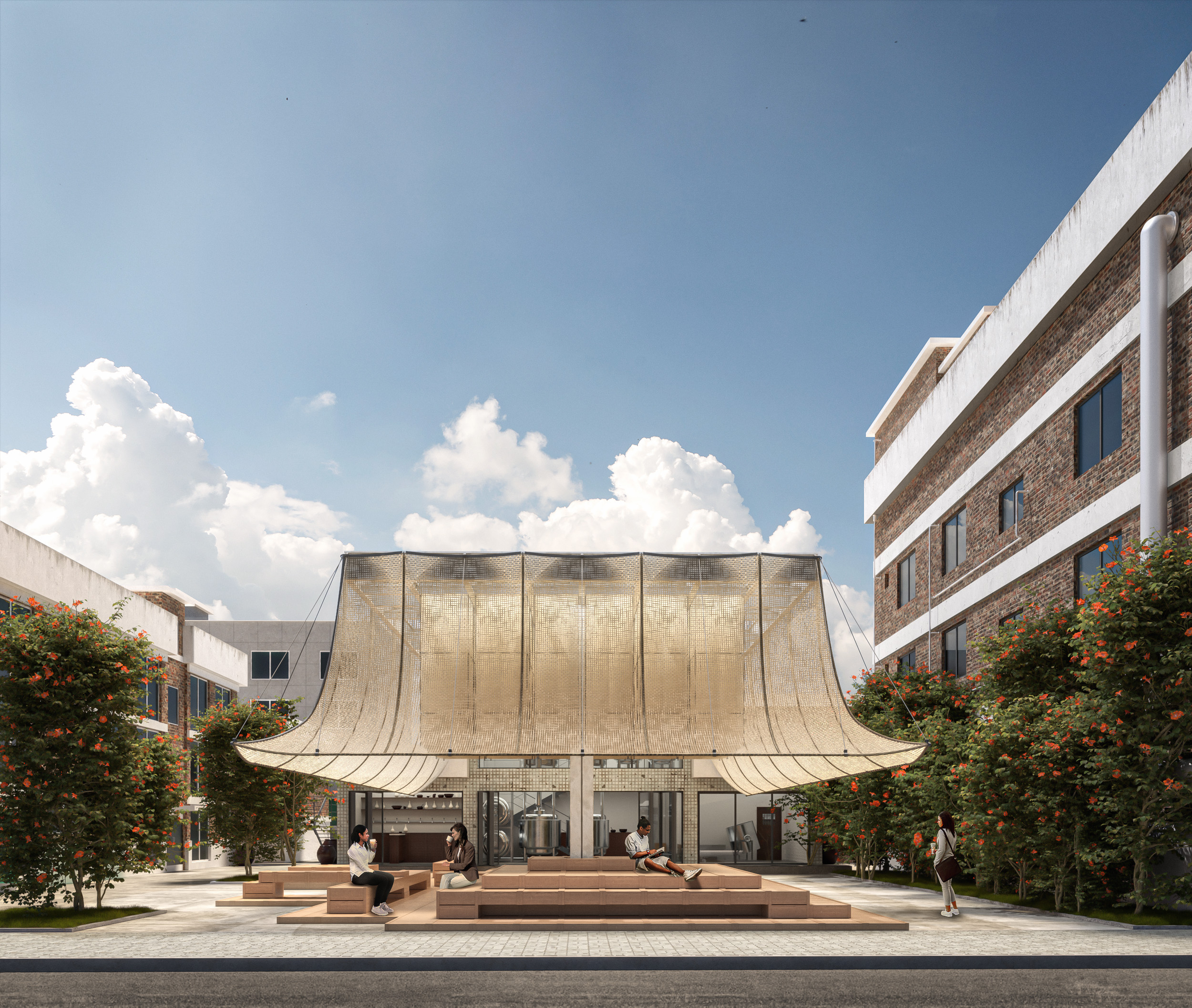
앞의 개념을 건축적으로 재해석한 이미지이다. 캐노피가 삼베 덮개로 치환되어 아래 공간을 옹기처럼 감싸며 시간, 재료, 그리고 삶이 교차하는 사색의 공간을 만들어낸다. 기존의 건물과 두 개의 기둥은 그대로 보존되어, 과거 이동과 소비의 흔적 위에 ‘머무름과 교류의 장’이 다시 형성된다. 사람들은 캐노피 아래에서 마루에 앉아 머물고, 천천히 발효되는 시간의 리듬 속에서 공동체의 감각을 회복한다. 지하의 유류 탱크는 ‘누룩의 방’으로 재해석되어, 미생물이 오염된 토양을 정화하는 장소가 된다. 지상에서는 사회적 발효가, 지하에서는 생태적 발효가 일어나며, 이중적 순환 구조가 완성된다. 결국 이 프로젝트는 버려진 주유소를 도시 재생의 살아 있는 프로토타입으로 탈바꿈시킨다. 이곳에서 건축은 집단적, 환경적 치유를 위한 도구이자 매개체가 된다.
This image is an architectural reinterpretation of the preceding concept: the canopy becomes the hemp cover, enveloping the space beneath like an onggi, creating a contemplative chamber where time, material, and life intersect. The existing building and two columns are preserved, grounding the new intervention on traces of past mobility and consumption. Under the canopy, people gather, rest, and participate in the slow rhythm of fermentation, rediscovering a sense of community. Below ground, the former fuel tanks are reimagined as nuruk chambers where microorganisms remediate the contaminated soil. While social fermentation unfolds above, ecological fermentation occurs below—forming a dual cycle of renewal. Ultimately, the project transforms an abandoned gas station into a living prototype of urban regeneration—where architecture becomes both vessel and medium for collective and environmental healing.
Site

프로젝트의 부지는 한때 사람과 차량의 이동이 교차하던 수원 도심의 복합용도 지역에 있다. 역사적으로는 머무름과 교류의 상징이었던 공동 우물이 자리했던 곳이지만, 20세기에 들어서면서 이동과 소비를 상징하는 주유소로 변모하였다. 이후 연료 수요가 감소함에 따라 도심의 밀집된 조직 속에서 고립되고 방치된 장소가 되었다.
The site is located in a mixed-use urban district in Suwon, Korea—once a junction between the movement of people and vehicles. Historically, it was the location of a communal well, a symbol of dwelling and exchange, but during the 20th century, it was transformed into a gas station representing mobility and consumption. With the decline of fuel demand, the site became abandoned and isolated within the city’s dense fabric.
Design

모듈화와 실질적인 구현 가능성에 중점을 둔 디자인이다. 목재 데크인 ‘마루’, 삼베를 두른 ‘처마’, 조명을 상징하는 ‘초롱’은 모두 기존 구조물에 파이프와 턴버클로 부착 가능한 모듈로 제작되었다. 이러한 모듈 시스템은 도심 내 다른 폐주유소에도 적용할 수 있는 유연한 건축 프로토타입을 제시한다.
The design emphasizes modularity and practical feasibility. Maru (wooden decks), Cheoma (hemp eaves), and Chorong (lighting elements) are designed as attachable modules connected to the existing structure using pipes and turnbuckles. This modular system provides a flexible prototype for reusing other abandoned gas stations in urban settings.

기존 주유소 캐노피 구조를 감싸 새로운 피부처럼 덧입는다.
Drawings

‘이동에서 머무름으로’ 이어지는 공간적 전환을 설계했다.
Section

지하에서는 양조하고 남은 폐누룩의 미생물이 오염된 토양을 정화한다.
지상과 지하의 이중적 순환 구조 속에서, 건물은 오염된 땅과 잃어버린 공동체를 회복한다.
Images

햇빛에 따라 변화하는 삼베의 결은, 빠름에서 느림으로 전환된 시간을 비춘다.


Panel

credit
오세창 Sechang Oh + 황미리 Miri Hwang
RE:FORM – New Life for Old Spaces (Buildner, 2025) – Honorable Mention
2025